
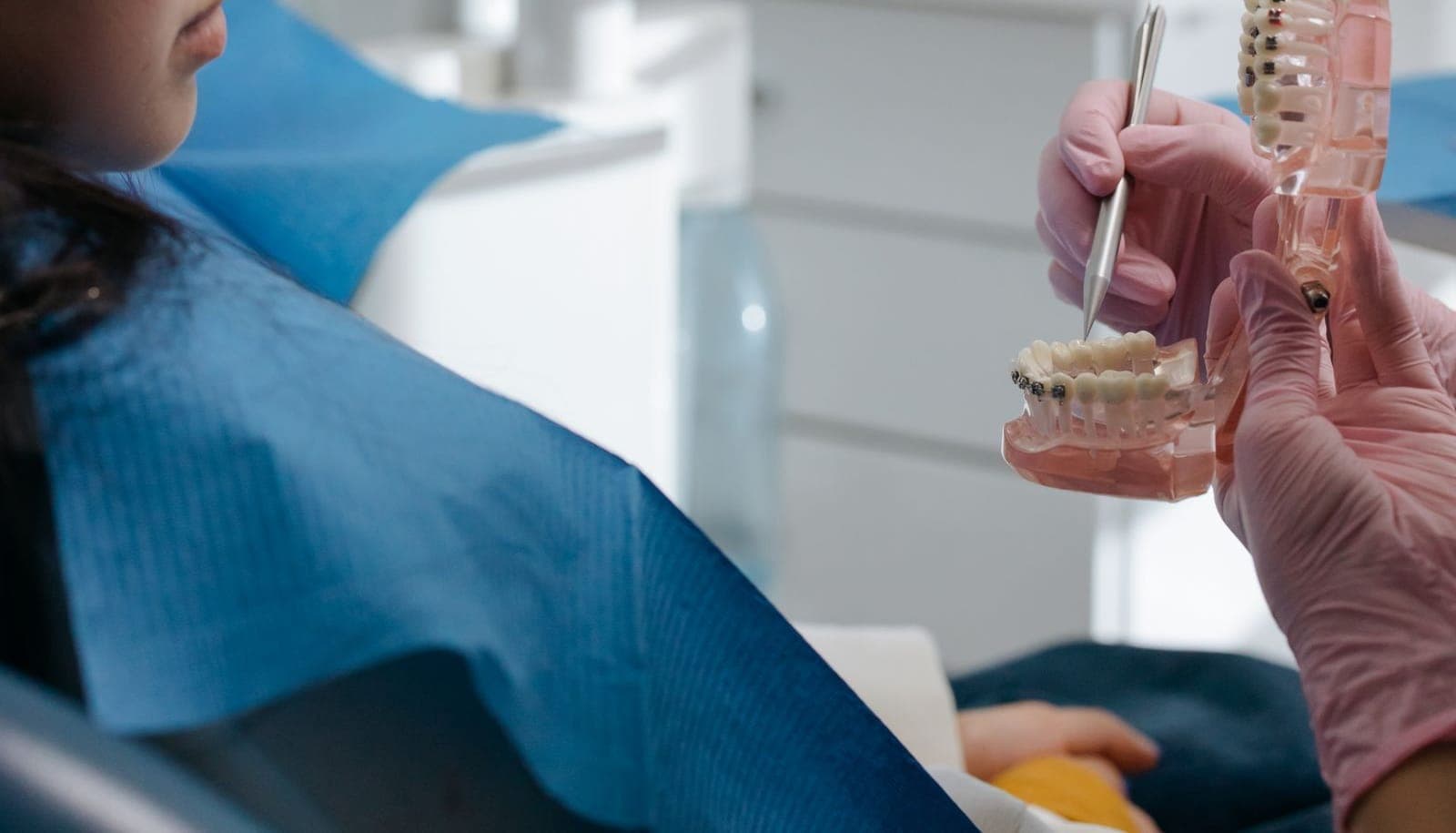
2026-07-27 · 8 min read
Key takeaways
- Full mouth restoration options range from individual implants with crowns to All-on-4, All-on-6, implant overdentures, and full-arch bridges on titanium or PEEK frameworks, and the right choice depends on bone volume, remaining teeth, and maintenance preferences rather than a single best method.
- Most full mouth restorations abroad are properly staged across two trips, because bone needs roughly three to six months to fuse to the implants (osseointegration) before definitive teeth can safely be fitted.
- CBCT 3D imaging combined with Navident dynamic navigation lets clinicians plan implant positions around nerves and sinuses digitally and then place implants to that plan in real time, which matters most in full-arch cases where only four or six implants carry an entire arch.
- Dental Med Austria in Tirana, Albania has treated more than 24,000 patients since 2009, works to ISO 9001 quality management certified by TUV NORD, and is a member of the ITI (International Team for Implantology).
- Every implant placed at Dental Med Austria is recorded with its serial number in a patient-held implant passport and carries a lifetime manufacturer warranty, so any future dentist can identify the exact hardware in the patient's jaw.
Full mouth restoration in Albania means rebuilding one or both jaws of failing or missing teeth on dental implants, and there are five main ways to do it: individual implants with crowns, All-on-4, All-on-6, implant overdentures, and a full-arch bridge on a titanium or PEEK framework. No single method is best for everyone; the right choice depends on your bone volume, how many natural teeth can be saved, and how you prefer to clean and maintain the result. At Dental Med Austria (DMA) in Tirana, that decision is made from 3D CBCT diagnostics, and treatment is staged across two short trips so implants can heal before the final teeth are fitted.
What Full Mouth Restoration Actually Involves
Full mouth restoration is a sequence, not a single procedure. Depending on your starting point, it can combine extractions, bone or gum regeneration, implant placement, root canal treatment on teeth worth keeping, and a definitive set of crowns, bridges, or an implant-supported arch.
The building blocks, from implants and crowns to microscope endodontics and professional hygiene, are set out in our full treatment catalogue. A good plan uses only what your mouth actually needs, and suitability is always confirmed individually from diagnostics, never assumed from a photo.
The Five Full-Arch Options Explained
- Individual implants with crowns. Each missing tooth, or short span of teeth, gets its own implant support. This is the most tooth-like result and the easiest to repair one unit at a time, but it requires the most bone, the most implants, and the most surgery.
- All-on-4. A fixed full-arch bridge on four implants, with the back two tilted to anchor in the strongest available bone. The tilt often lets patients with significant bone loss avoid grafting.
- All-on-6. The same fixed-arch concept on six implants. The extra fixtures spread chewing forces and add redundancy, but they need somewhat more bone volume.
- Implant overdentures. A removable denture that clips onto two to four implants. It comes out daily for cleaning, needs the least bone and surgery, and suits patients who want implant stability without a fixed bridge.
- Full-arch bridge on a titanium or PEEK framework. The definitive prosthesis fitted after healing in All-on-4 and All-on-6 cases. A milled titanium frame is rigid and slim; PEEK, a high-performance polymer, is lighter and slightly shock-absorbing. Both carry ceramic or composite teeth.
Comparing the Options on Non-Price Factors
| Option | Implants per arch (typical) | Bone needed | Fixed or removable | Home maintenance | Often suits |
|---|---|---|---|---|---|
| Individual implants + crowns | Eight or more | High, in most positions | Fixed | Brush and floss like natural teeth | Good bone, some savable teeth, maximum repairability |
| All-on-4 | Four | Moderate; tilted implants use remaining bone | Fixed | Brushing plus cleaning under the bridge | Advanced bone loss, wish to avoid grafting |
| All-on-6 | Six | Moderate to good | Fixed | Brushing plus cleaning under the bridge | Adequate bone, priority on load distribution |
| Implant overdenture | Two to four | Lowest requirement | Removable | Removed and cleaned daily | Limited bone, simpler hygiene, long-term denture wearers |
| Titanium or PEEK full-arch framework | Four to six | As per All-on-4 or All-on-6 | Fixed | Brushing plus professional reviews | The definitive long-term prosthesis after healing |
Every row above is a generalisation. Your CBCT scan, medical history, and bite decide which column you actually belong in.
Which Option Suits You: Bone, Teeth, and Maintenance
Three questions settle most cases. First, how much bone remains, and exactly where; this is why no careful clinic will promise you All-on-4 before seeing 3D imaging. Second, how many of your own teeth are genuinely worth saving: preserving a strategically sound tooth with a microscope root canal can strengthen a plan, while keeping a doomed one undermines it. Third, maintenance preference: fixed bridges feel closest to natural teeth but demand disciplined cleaning underneath, while overdentures come out daily, which some patients find reassuring and others never accept.
Where a specific site lacks bone, regeneration with Botiss biomaterials (Cerabone bone substitute with Jason collagen membranes) can rebuild it, although grafted sites need their own healing time. Our clinical team weighs all of this against your scan before recommending anything.
Why Treatment Is Staged Across Two Trips
A typical full-mouth case at DMA runs like this. On the first trip, diagnostics are confirmed, failing teeth are removed, any grafting is done, and implants are placed, with Navident navigation where indicated. When implants achieve sufficient primary stability, provisional teeth can usually be fitted, so most patients do not leave without teeth.
Then biology takes over. Bone fuses to the implant surface, a process called osseointegration, over roughly three to six months, generally slower in the softer bone of the upper jaw. Fitting a definitive full-arch bridge before integration is complete risks micro-movement and implant failure, which is why the healing period must be respected, not negotiated away. On the second trip, integration is checked, digital scans (3Shape or Medit) capture the healed arches, and the final framework and teeth are made and fitted.
A patient coordinator consolidates appointments so each trip stays short, with airport pickup in Tirana and a partner hotel nearby. If you want to sanity-check dates against flights before committing, ask us about scheduling.
How CBCT and Navigated Surgery De-Risk Complex Cases
Vatech 3D CBCT imaging maps bone height, width, and density, along with the exact position of the nerve canal in the lower jaw and the sinus floor in the upper jaw. Implant positions are planned digitally on that scan before anyone picks up a drill.
In surgery, Navident dynamic navigation then tracks the drill against the plan in real time, similar to GPS guidance, so tilted All-on-4 implants can be placed at the planned angle even where safety margins are narrow. This matters most in full-arch work: when only four or six implants carry an entire arch, every position counts. Navigation does not replace surgical judgement, and no technology can guarantee a clinical outcome, but it removes guesswork from the cases with the least room for error. DMA is a member of the ITI (International Team for Implantology) and works to ISO 9001 quality management certified by TUV NORD, with documented sterilisation and infection-control protocols.
Materials Made in the In-House Laboratory
Definitive teeth are designed and milled in DMA's own CAD/CAM laboratory on an iMES iCORE system, with ceramics finished in Dekema furnaces. Single crowns and short bridges are typically Ivoclar IPS e.max lithium disilicate or GiSi pressed ceramic; full arches use premium multilayer zirconia or ceramic teeth on titanium or PEEK frames.
Having the laboratory in the same building matters more than it sounds. Try-ins, shade adjustments, and fit corrections happen during your stay rather than being posted to an external lab and back.
An Implant Passport for a Mouth Full of Hardware
A full-mouth case can mean eight or more implants, and decades from now a dentist somewhere else will need to know exactly what is in your jaw. Every implant DMA places, whether Straumann BLT or BLX, ETK Premium or ETK, Alpha-Bio, DETECH, or Biodem, is recorded with its serial number in a patient-held implant passport, and each carries a lifetime manufacturer warranty alongside the clinic's written treatment guarantee.
That documentation is what lets any future dentist identify the implant platform and source the right screw, driver, or replacement part without exploratory surgery. If you are weighing systems, our guide to how the implant brands we place compare explains the differences without the marketing gloss.
Free treatment plan
Find out what your new smile could look like in Tirana
Send a panoramic X-ray or a few photos and our clinical team will reply with a free, written treatment plan within 24–48 hours, with no obligation.
Get my free planWhat to Verify at Any Clinic, Anywhere
Use this checklist wherever you go, including with us:
- A CBCT scan before any full-arch plan is finalised, not just a panoramic X-ray
- The exact implant brand and model in writing, with serial numbers documented after surgery
- A schedule that respects osseointegration rather than compressing it to fit a holiday
- Who makes the prosthetics, and whether the laboratory is in-house
- A written guarantee from the clinic plus the manufacturer's warranty terms
- Independent quality certification such as ISO 9001 and memberships such as the ITI
On cost: treatment in Albania generally costs less than in Western Europe because clinic overheads, wages, and property costs are lower, not because different materials are used. The same Straumann implant or e.max ceramic can be placed in Tirana as anywhere else. Treat any headline price as meaningless until it appears in an itemised written plan for your specific mouth.
If you are considering full mouth restoration, the most useful next step costs nothing. Send us a panoramic X-ray (OPG), a CBCT if you have one, or simply recent photos, and our clinical team at a clinic that has treated more than 24,000 patients since 2009 will prepare a free, personalised written treatment plan within 24-48 hours, with transparent itemised pricing and no obligation to proceed. We work in English, Italian, German, French, and Albanian, and a coordinator will fit everything around a short stay. Request your free treatment plan here and compare us calmly, on the checklist above, against anyone else you are considering.
Frequently asked questions
How many dental implants do I need for full mouth restoration?
It depends on the method: an implant overdenture can work on two to four implants per jaw, All-on-4 uses four, All-on-6 uses six, and restoring each tooth individually with crowns typically needs eight or more implants per arch. The honest answer for your mouth only comes from a 3D CBCT scan, which shows how much bone is available and where. At Dental Med Austria in Tirana, the implant number is confirmed in a free written treatment plan prepared from your X-ray or CBCT within 24-48 hours.
What is the difference between All-on-4 and All-on-6?
Both replace a full arch of teeth with a fixed implant-supported bridge, but All-on-4 uses four implants with the back two tilted to anchor in the strongest available bone, while All-on-6 uses six implants for wider load distribution and extra redundancy. All-on-6 generally needs more bone volume, so patients with more advanced bone loss are often better served by All-on-4. Suitability is always decided individually from CBCT imaging, not from preference alone.
Can full mouth restoration in Albania be done in one trip?
Usually not, and you should be cautious of schedules that promise it. Implants need a healing period of roughly three to six months for bone to fuse to them, a process called osseointegration, before definitive teeth can safely be fitted, so most full-mouth cases are staged across two short trips to Tirana. Between trips most patients wear provisional teeth, and a patient coordinator at Dental Med Austria consolidates appointments so each visit stays short.
Are implant overdentures as good as fixed full-arch bridges?
They solve the same problem differently. A fixed bridge on All-on-4 or All-on-6 stays in permanently and feels closest to natural teeth, while an overdenture clips onto two to four implants and is removed daily for cleaning. Overdentures need less bone and less surgery and suit patients who value simple hygiene, but some people never accept removable teeth, so neither option is universally better; the right choice is confirmed from diagnostics and your own preferences.
What if I do not have enough bone for dental implants?
Lack of bone rarely rules out full mouth restoration entirely. Tilted-implant protocols such as All-on-4 are specifically designed to use the bone you still have, and targeted regeneration with biomaterials such as Botiss Cerabone and Jason membranes can rebuild deficient sites, although grafted areas need their own healing time. A CBCT scan is the only reliable way to know which route applies to your jaw.
How do I know which implants were placed in my mouth?
At Dental Med Austria every implant is documented with its brand, model, and serial number in a patient-held implant passport, and each implant carries a lifetime manufacturer warranty alongside the clinic's written treatment guarantee. This matters in a full-mouth case because any future dentist, anywhere in the world, needs the exact implant platform to source compatible screws and parts. If a clinic cannot tell you in writing exactly what it plans to place, treat that as a warning sign.