
2026-07-27 · 7 min read
Key takeaways
- True teeth whitening works by oxidation: dentist-supervised peroxide gels break down pigmented molecules inside the enamel, while whitening toothpastes only polish away surface stains.
- At Dental Med Austria in Tirana, Albania, every whitening treatment starts with a dental exam and professional cleaning, because whitening over cavities, gum disease or plaque is both less effective and less comfortable.
- Veneers, crowns and fillings do not whiten, so natural teeth should be whitened first and any new restorations shade-matched only after the result has stabilised.
- In-clinic whitening typically gives the fastest change, often in a single visit, while custom take-home trays whiten gradually and remain useful for maintenance top-ups long after treatment.
- Dental Med Austria, an ISO 9001 certified clinic in Tirana that has treated more than 24,000 patients since 2009, prepares a free written whitening plan with itemised pricing within 24-48 hours from photos or an X-ray.
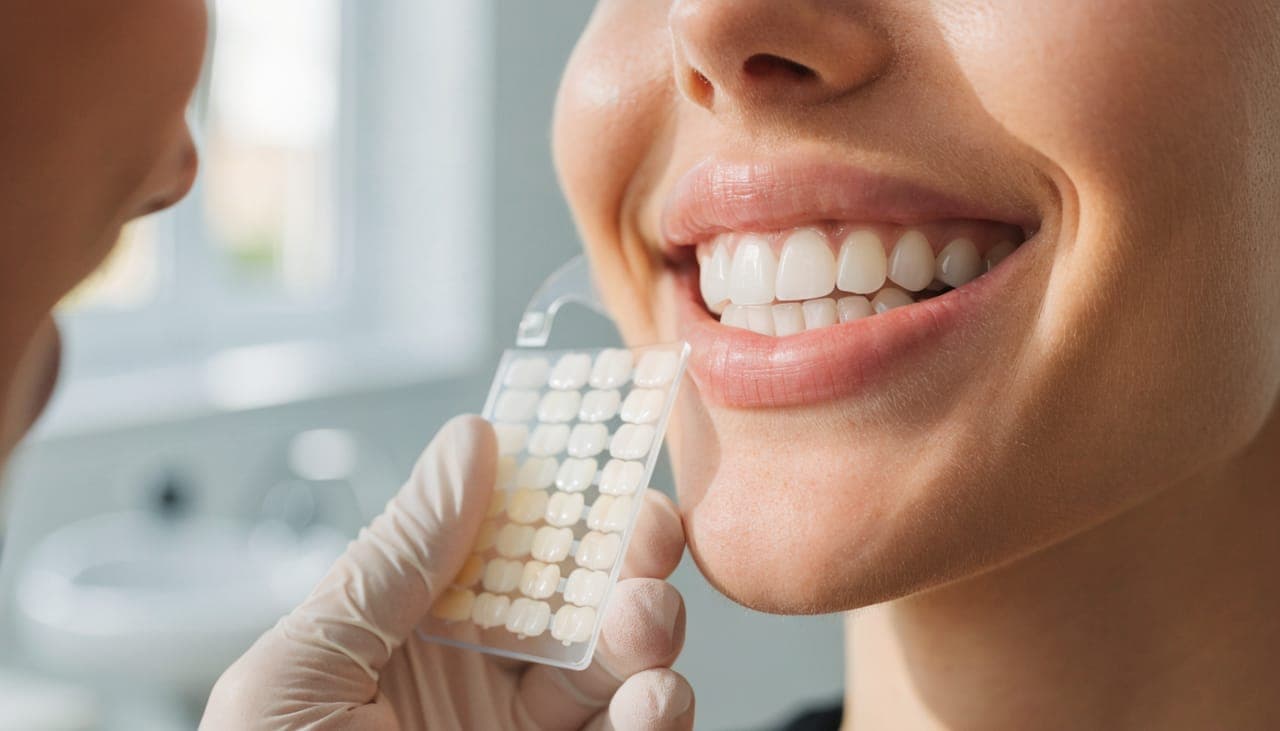
Teeth whitening in Albania is a dentist-supervised cosmetic treatment that lightens the natural colour of teeth using peroxide-based gels, either in a single in-clinic session or gradually at home with custom-made trays. At Dental Med Austria (DMA) in Tirana, whitening always starts with an exam and a professional cleaning, because healthy, plaque-free teeth whiten more evenly and usually with less sensitivity. Results differ from person to person, which is why suitability is always confirmed individually from diagnostics.
What Actually Makes Teeth Whiter?
Genuine whitening comes down to one mechanism: oxidation. Professional gels contain hydrogen peroxide, or carbamide peroxide that slowly releases it. The peroxide passes into the enamel and breaks large, pigmented stain molecules into smaller, lighter fragments, so the tooth itself becomes brighter rather than just cleaner on the surface.
That is the key difference from most "whitening" toothpastes, which rely on mild abrasives to polish away surface deposits. Polishing helps, but it cannot change the underlying shade of the tooth. In the European Union, over-the-counter whitening products are limited to very low peroxide levels, while higher-strength gels may only be used under dental supervision. That regulatory line exists for a reason: peroxide is highly effective, but it needs a professional to protect the gums, check enamel health and control the dose.
Extrinsic vs Intrinsic Staining: Know Your Stain First
Not all discolouration responds to bleaching, so a careful clinic identifies the type of stain before recommending anything.
- Extrinsic stains sit on or just within the tooth surface. Coffee, tea, red wine, curry, tobacco and plaque build-up are the usual causes. These respond well to professional cleaning and whitening.
- Intrinsic stains live deeper, inside the dentine or enamel structure. Causes include natural ageing, trauma to a tooth, certain antibiotics taken in childhood, fluorosis and root canal treatment. These may lighten only partially, or not at all.
A single dark tooth after a root canal, for example, often needs internal whitening or a veneer rather than standard bleaching. Identifying the stain type correctly is the first thing our clinical team does, because it determines whether whitening will actually deliver the result you are picturing.
In-Clinic Whitening vs Take-Home Trays vs Shop-Bought Strips
All three options use peroxide chemistry, but they differ enormously in strength, fit, supervision and safety margin. Here is how they compare in practice:
| Feature | In-clinic whitening | Custom take-home trays | Shop-bought strips |
|---|---|---|---|
| Supervision | Applied by the clinical team | Dentist-prescribed, used at home | None |
| Gel strength | Highest, professionally controlled | Moderate, tailored to you | Lowest permitted for retail |
| Fit and coverage | Gum barrier protects soft tissue | Trays moulded to your teeth for even contact | One-size strips, often uneven |
| Speed of results | Often a visible change in one visit | Gradual, typically over one to two weeks | Slow and modest |
| Sensitivity control | Monitored live, desensitisers on hand | Gel strength and wear time adjustable | Little to none |
| Dental exam included | Yes, always | Yes, before trays are made | No |
Many patients get the best of both worlds: an in-clinic session for an immediate jump in brightness, plus custom trays to refine and later maintain the result. Because the trays are moulded to your own teeth, they stay useful for top-ups long after your visit.
Why a Dental Exam Always Comes Before Whitening
Whitening gel on an unexamined mouth is where most bad whitening stories begin. Before any whitening at DMA, our clinical team checks for:
- Untreated cavities or cracked teeth, which can let gel reach the nerve and cause real pain.
- Leaking or worn fillings, for the same reason.
- Gum inflammation or periodontal disease, since irritated gums react badly to peroxide.
- Exposed root surfaces, which do not whiten and are prone to sensitivity.
- Existing crowns, veneers or fillings in the smile zone, which will not change shade.
A professional cleaning, often with Airflow, comes next, so the gel works on clean enamel rather than a layer of plaque and surface stain. Quite a few patients are pleasantly surprised by how much brighter their teeth look after the cleaning alone. If you would like to see what an assessment involves, you can request a consultation through our contact page before committing to anything.
Sensitivity: Normal, Temporary and Manageable
Temporary sensitivity is the most common side effect of whitening, and for most people it is mild and short-lived, usually settling within a day or two. It happens because peroxide temporarily dehydrates the enamel and can mildly irritate the nerve. A professional setting keeps this in check in ways a boxed product cannot:
- gum barriers that keep gel off soft tissue during in-clinic sessions
- desensitising gels with ingredients such as potassium nitrate and fluoride
- gel concentration and wear time adjusted to your history of sensitivity
- sessions spaced out rather than overloading the enamel in one go
If your teeth are already sensitive, tell the team at your exam. Protocols are always tailored to the individual, and for some patients a gentler take-home programme is simply the wiser route.
How Long Do Whitening Results Last?
There is no honest universal answer: results typically last from many months to a few years, and your habits matter far more than the product used. Coffee, tea, red wine and smoking re-stain teeth fastest; excellent hygiene and regular professional cleanings preserve results longest.
To keep your new shade for as long as possible:
- rinse with water after strongly coloured food and drinks
- keep up daily brushing and interdental cleaning
- book periodic hygiene visits to remove new surface stains
- use your custom trays for occasional short top-ups, as advised by your dentist
No ethical clinic will guarantee a specific shade or a fixed lifespan, because biology and lifestyle vary. What we can promise is an honest assessment of what whitening can realistically achieve for your teeth.
When Whitening Is Not the Right Answer
Whitening only changes natural tooth structure. Porcelain and ceramic restorations, including IPS e.max veneers and zirconia crowns, keep the shade they were made in. That has two practical consequences:
- If you already have visible restorations, whitening may create a mismatch between them and your newly lightened natural teeth.
- If you are planning veneers or crowns, whiten first, let the shade stabilise for a week or two, and then have the new restorations matched to the final result.
Whitening is also usually not the answer for deep intrinsic discolouration, severe fluorosis, or a single dark non-vital tooth, where internal whitening or a veneer tends to work better. And when the real issue is a gummy smile rather than tooth shade, gum contouring with a soft-tissue laser may improve the smile more than bleaching would. You can explore the full menu of cosmetic and restorative treatments to see how these options fit together. As a standard precaution, whitening is postponed during pregnancy and breastfeeding.
Teeth Whitening at Dental Med Austria in Tirana
DMA offers both professional in-clinic whitening and custom take-home whitening at our clinic in the Lake View Residence, Rruga Kristo Luarasi, Tirana. The clinic has treated more than 24,000 patients since 2009, works to ISO 9001 quality standards certified by TUV NORD, and cares for international patients from the UK, Ireland, Italy, Germany, Switzerland, Austria and France, with care available in English, Italian, German, French and Albanian.
Whitening in Albania often costs noticeably less than in Western Europe, mainly because clinic overheads and staffing costs are lower. At DMA that never means cutting back on materials or protocols. We publish no headline figures because every case is priced individually; you can read how our transparent, itemised pricing works instead. Whitening also pairs naturally with a hygiene visit, a check-up or a wider treatment plan during a short stay: a coordinator consolidates appointments so everything fits your trip, with airport pickup and partner-hotel arrangements taken care of. If you are still comparing options, our guide to choosing the best dental clinic in Albania explains what to check at any clinic, anywhere.
Free treatment plan
Find out what your new smile could look like in Tirana
Send a panoramic X-ray or a few photos and our clinical team will reply with a free, written treatment plan within 24–48 hours, with no obligation.
Get my free planGet Your Free Written Whitening Plan
If you are considering teeth whitening in Albania, start with information rather than a booking. Send us recent photos or a panoramic X-ray through our contact page, and our clinical team will prepare a free, personalised, written treatment plan within 24-48 hours, with transparent itemised pricing and no obligation whatsoever. You will know exactly what is realistic for your smile, whether that is a single whitening visit, a take-home programme, or a different path entirely, before you decide anything at all.
Frequently asked questions
What makes my teeth whiter?
Teeth become genuinely whiter through oxidation: peroxide-based gels, applied by a dentist in clinic or worn in custom take-home trays, penetrate the enamel and break down the pigmented molecules that cause discolouration. Whitening toothpastes only polish away surface deposits, so they cannot change the underlying shade of the tooth. Professional cleaning also helps by removing external stains from coffee, tea, wine and tobacco before any bleaching begins.
Is professional teeth whitening safe for my enamel?
Dentist-supervised whitening is considered safe for healthy teeth when it follows a proper exam, because the dentist first rules out cavities, gum disease and exposed roots and then protects the gums during treatment. The most common side effect is temporary sensitivity, which usually settles within a day or two and can be managed with desensitising gels and adjusted protocols. Suitability is always confirmed individually from diagnostics.
How long does teeth whitening last?
Whitening results typically last from many months to a few years, depending mainly on habits such as coffee, tea, red wine and smoking, and on how well surface stains are kept under control. Regular hygiene visits and occasional top-ups with custom take-home trays help preserve the result. No reputable clinic will guarantee a fixed shade or lifespan, because results vary from person to person.
Can veneers, crowns or fillings be whitened?
No. Whitening gels only change natural tooth structure, so porcelain veneers, ceramic and zirconia crowns and composite fillings keep the shade they were made in. If you plan to have both, the usual sequence is to whiten the natural teeth first, let the shade stabilise for a week or two, and then have any new restorations matched to the final result.
Why do I need a dental exam before teeth whitening in Albania?
An exam protects you: whitening over an untreated cavity, a cracked tooth or inflamed gums can be painful and gives patchy results. At Dental Med Austria in Tirana, whitening is always preceded by an exam and a professional cleaning so the gel works evenly on healthy, plaque-free enamel. The exam also identifies whether your discolouration is extrinsic or intrinsic, which determines whether whitening will work for you at all.
Is it worth combining teeth whitening with a dental trip to Albania?
For many international patients, yes: whitening pairs naturally with a hygiene visit, a check-up or a larger treatment plan during a short stay in Tirana. Dental Med Austria arranges airport pickup, partner hotels and consolidated appointments so treatment fits a brief trip. The clinic prepares a free written treatment plan with itemised pricing within 24-48 hours from photos or an X-ray, so you know exactly what is planned before you travel.