
2026-07-27 · 7 min read
Key takeaways
- CE marking under the EU Medical Device Regulation confirms an implant or biomaterial met safety and performance requirements before sale, but it does not rank brands or guarantee individual outcomes.
- ISO 9001 certifies a clinic's processes, not its products; a trustworthy clinic combines audited processes with CE-marked, brand-named materials and per-device traceability.
- Every legitimate implant carries a serial or lot number; if it is not recorded in your file and handed to you in a patient-held implant passport, you cannot prove what was placed.
- The complete patient paper trail is four documents: implant passport, written treatment plan, written guarantee, and a clinical report with imaging.
- Dental Med Austria in Tirana names every system it uses (Straumann, ETK, Alpha-Bio, DETECH, Biodem, Ivoclar, Botiss), publishes verifiable certificates on a public Evidence hub, and has treated 24,000+ patients since 2009.
"Certified dental materials" means materials whose safety can be proven on paper: a CE mark issued under the EU Medical Device Regulation, a named manufacturer, and a serial or lot number recorded in your patient file. CE marking confirms that an implant or biomaterial met European safety and performance requirements before it was ever sold; it does not rank brands against each other and it does not guarantee your personal result. The only way a patient can actually verify any of this is documentation: an implant passport, a written treatment plan, a written guarantee, and a clinical report.
What CE marking on implants and biomaterials actually certifies
CE marking is a legal declaration under the EU Medical Device Regulation (MDR 2017/745) that a medical device meets the regulation's general safety and performance requirements. For implantable devices, which fall into the higher risk classes, the manufacturer cannot simply self-certify. An independent notified body must review the technical documentation, the clinical evaluation, and the manufacturing controls before a certificate is issued.
In practical terms, a CE mark on a dental implant or bone graft material tells you four things:
- The manufacturer is identified and legally accountable in the EU market.
- The materials have been tested for biocompatibility against recognised standards.
- A clinical evaluation of the device was reviewed by an independent body.
- The manufacturer is obliged to run post-market surveillance and report problems.
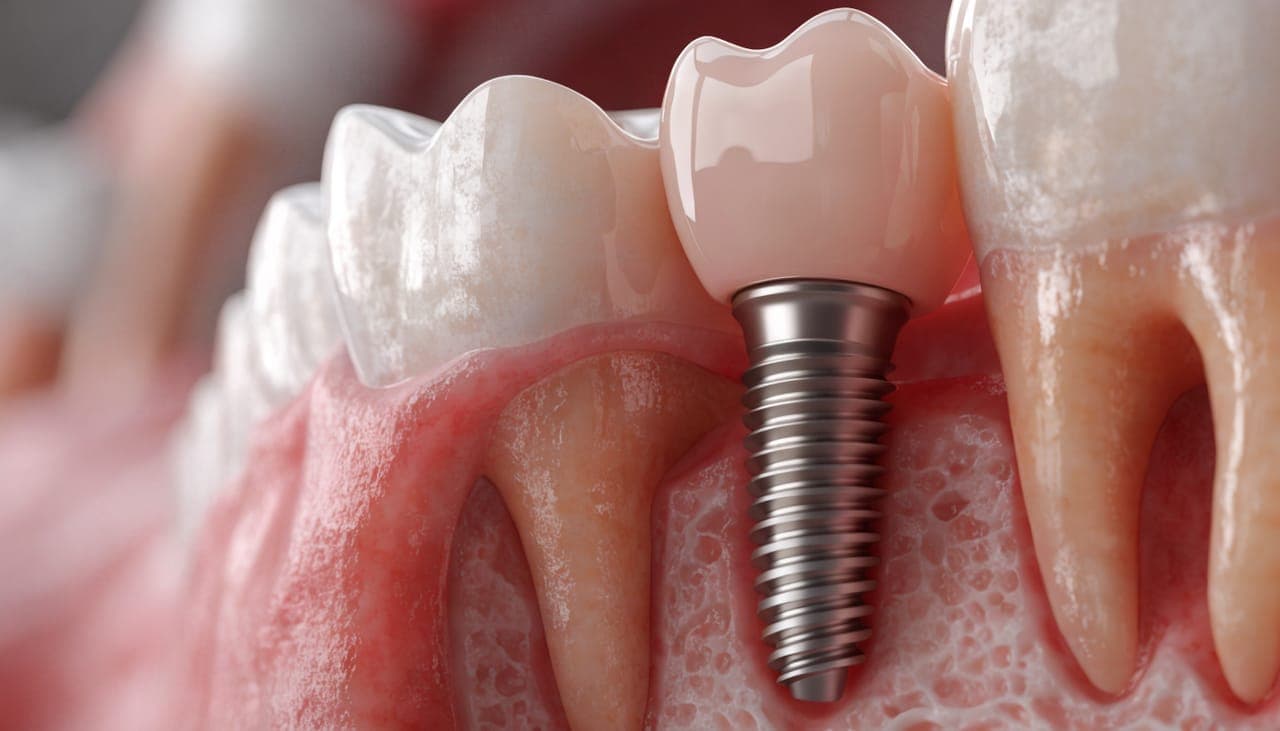
The implant systems used at Dental Med Austria are named brands with documented origin: Straumann BLT and BLX (Swiss-made), ETK Premium and ETK (France, CE-marked), Alpha-Bio, DETECH, and Biodem (Germany, CE-marked). The same applies to the regenerative side, where Botiss biomaterials such as Cerabone and the Jason membrane are CE-marked products with a documented origin.
What CE marking does not certify
An honest clinic will tell you the limits of the CE mark just as clearly as its value:
- It is not a quality ranking. Two CE-marked implants can differ enormously in research depth, surface technology, and long-term published data.
- It does not prove which device was placed in your jaw. The mark lives on the packaging; only your records connect a specific serial number to you.
- It does not cover the clinic. Sterilisation, handling, storage, and surgical protocol are the clinic's responsibility, not the manufacturer's.
- It does not guarantee an outcome. Healing depends on your bone, general health, hygiene, and maintenance, which is why suitability is always decided individually from diagnostics.
This is exactly why the paper trail, not the logo on a brochure, is what protects you.
Named brands versus anonymous materials
A phrase like "premium implant included" with no manufacturer named should prompt questions. A named brand gives you three things an anonymous device never can: published scientific documentation you can read yourself, identifiable spare parts (abutments, screws, copings) that a dentist anywhere in the world can order years later, and a manufacturer warranty that can actually be claimed.
With an anonymous implant, none of that exists. If a component loosens in fifteen years, a new dentist cannot even identify the connection type without exploratory work.
Before committing to treatment anywhere, ask two questions in writing: which exact brand and product line will be used, and will the serial number appear in my documents? If you want to understand how the major systems differ, our guide to dental implant brands compared walks through the trade-offs without marketing language.
Serial numbers, lot traceability, and the implant passport
Every legitimate implant leaves the factory with a serial or lot number printed on peel-off labels. In a correct surgical workflow, those labels go straight into your clinical record at the moment the implant is opened, so the device, the patient, the site, and the date are permanently linked.
The patient-facing half of this system is the implant passport: a document you keep, listing the brand, model, diameter, length, serial or lot number, position in the jaw, and date of placement. It belongs to you, not to the clinic, which matters if you ever move, change dentists, or need care abroad.
At Dental Med Austria, every implant placed comes with documented serial numbers, a patient-held implant passport, and a lifetime manufacturer warranty. This is standard procedure on every case, not an upgrade.
ISO 9001 is a process certificate, not a product stamp
Here is a distinction many clinics blur: ISO 9001 certifies how an organisation runs, not what its products are. It is a quality management system standard, meaning documented procedures, staff training records, internal audits, corrective actions, and periodic external audits by the certifying body.
That makes it valuable and limited at the same time. A clinic could hold ISO 9001 and still place anonymous implants; another could use excellent implants with chaotic record-keeping. What you want is both layers: CE-marked, brand-named products, handled inside an independently audited process.
Dental Med Austria's quality management system is ISO 9001 certified by TUV NORD, with documented sterilisation and infection-control protocols, and the clinic is a member of the ITI (International Team for Implantology). Process certification, product certification, and traceability are three different claims, and each should be verifiable separately.
The paper trail every implant patient should receive
If you receive these four documents, you can reconstruct your treatment decades later, in any country, with any dentist:
| Document | What it contains | Why it matters later |
|---|---|---|
| Implant passport | Brand, model, dimensions, serial/lot number, position, date | Lets any future dentist identify the exact system and order compatible parts |
| Written treatment plan | Diagnosis, planned procedures, named materials, itemised costs | Proves what was agreed and which materials were promised, before treatment starts |
| Written guarantee | Clinic guarantee terms plus manufacturer warranty conditions | Defines exactly what is covered, for how long, and how to claim |
| Clinical report and imaging | Surgical notes, CBCT or panoramic images, restoration details | Gives future clinicians the biological context, not just the hardware list |
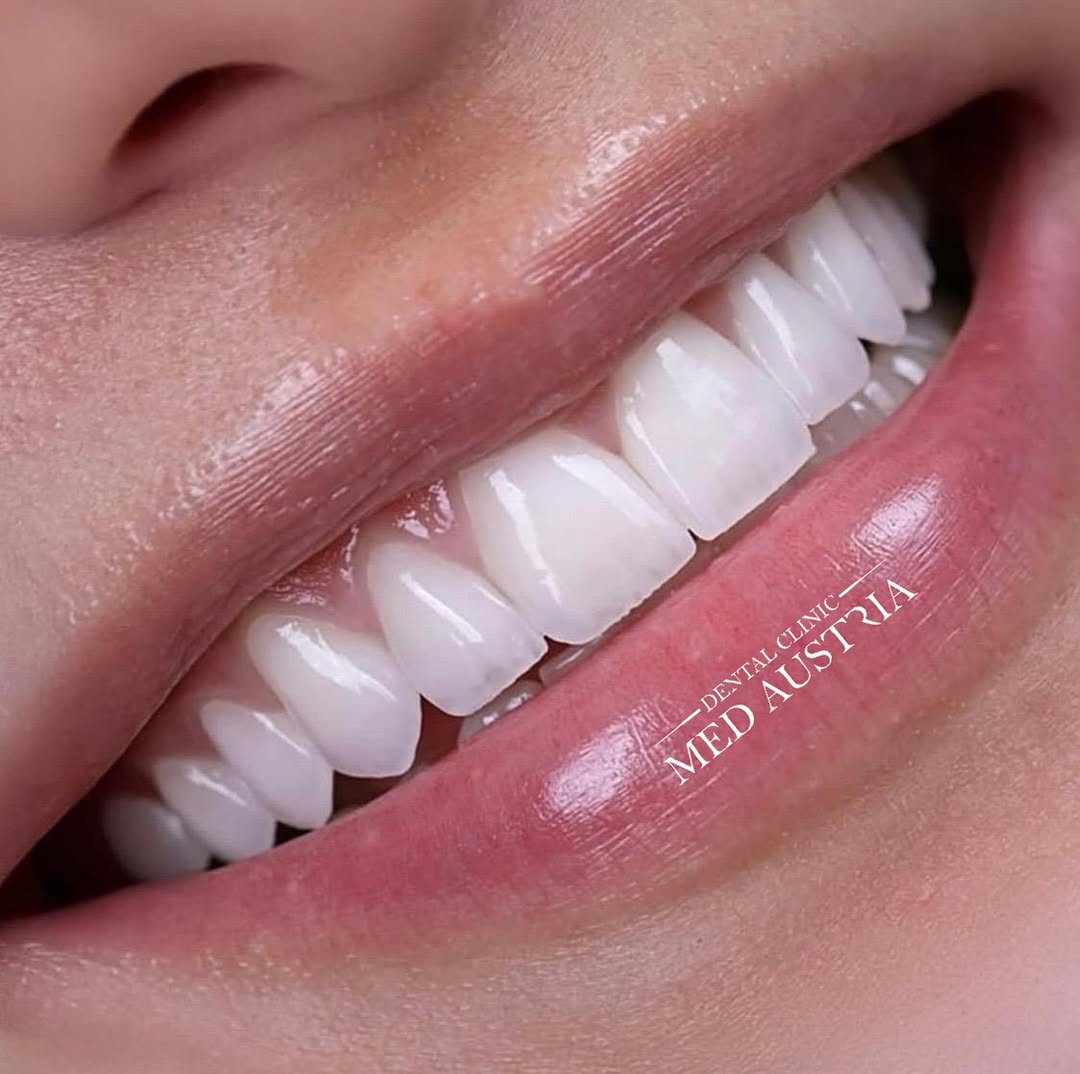
Restorative materials deserve the same discipline. At DMA, crowns and veneers in Ivoclar IPS e.max lithium disilicate, GiSi pressed e.max, or premium multilayer zirconia are milled and finished in the clinic's own in-house CAD/CAM laboratory, so the material identity of every restoration is recorded at the source rather than outsourced anonymously.
Why documentation matters most decades later
An implant is a decades-long commitment, and the moment documentation becomes priceless is usually far in the future. Picture a crown loosening eighteen years after placement, in a different country. The new dentist's first question is: what platform is this? With an implant passport, the answer takes seconds and the right screwdriver and components can be ordered. Without it, you face guesswork, imaging, and sometimes removal of a healthy restoration just to identify the connection.
Warranty claims work the same way: a lifetime manufacturer warranty is only claimable if the serial number linking that specific implant to you exists on paper. Clinics can close, servers can be wiped, but a patient-held document survives all of it. Documentation is not bureaucracy; it is the long-term half of the treatment itself.
How to verify certification claims at any clinic
Neutral checklist, valid anywhere in the world:
- Ask for the exact implant brand and product line in writing before you accept a plan.
- Ask to see the CE certificates or declarations of conformity for the implants and biomaterials.
- Ask how serial numbers are recorded and what documents you personally take home.
- Check who issued the clinic's ISO 9001 certificate and whether it is current.
- Ask for guarantee terms in writing, including what would happen if an implant fails.
- Prefer clinics that publish verifiable proof instead of asking you to take their word.
That last point is why Dental Med Austria runs a public Evidence hub with verifiable certificates, materials documentation, and traceability records, and publishes its patient reviews openly with a direct link to the live Google profile. Having treated 24,000+ patients since 2009, including internationals from the UK, Ireland, Italy, Germany, Switzerland, Austria, and France, the clinic's position is simple: claims you cannot check are not evidence.
Free treatment plan
Find out what your new smile could look like in Tirana
Send a panoramic X-ray or a few photos and our clinical team will reply with a free, written treatment plan within 24–48 hours, with no obligation.
Get my free planGet every material named in writing before you decide
The easiest way to test everything in this article is to request a plan and see whether the materials are named. Send a panoramic X-ray, CBCT, or photos and our clinical team in Tirana will prepare a free, personalised, no-obligation written treatment plan within 24-48 hours, with transparent itemised pricing confirmed for your case and every implant system and restoration material identified by brand. For international patients, airport pickup, partner-hotel arrangements, and consolidated appointments make verification part of a short, well-organised stay. Request your free written plan and compare the paperwork, not the promises.
Frequently asked questions
What does CE marking on a dental implant actually mean?
CE marking is a legal declaration under the EU Medical Device Regulation that the implant meets European safety and performance requirements. For implantable devices, an independent notified body must review the technical documentation, clinical evaluation, and manufacturing controls before the certificate is issued. It confirms regulatory conformity and manufacturer accountability, not superiority over other brands.
Is CE marking the same as ISO 9001 certification?
No, they certify different things. CE marking applies to a product and confirms it meets EU medical device requirements, while ISO 9001 certifies an organisation's quality management system, meaning its documented processes, audits, and corrective actions. A well-run clinic holds both: audited processes plus CE-marked, brand-named materials.
What is a dental implant passport and why do I need one?
An implant passport is a patient-held document listing the brand, model, diameter, length, serial or lot number, position, and placement date of each implant. It lets any dentist, anywhere, identify your exact system decades later to order compatible components or process a warranty claim. Because you keep it yourself, it survives even if the original clinic closes or records are lost.
How can I check which implant brand a clinic really uses?
Ask for the exact brand and product line in writing before accepting a treatment plan, and confirm the serial number will appear in your documents. Reputable clinics name their systems openly and can show CE certificates or declarations of conformity. Dental Med Austria, for example, lists its systems (Straumann BLT and BLX, ETK Premium and ETK, Alpha-Bio, DETECH, Biodem) and publishes verifiable certificates on its public Evidence hub.
What documents should I receive after dental implant treatment?
You should leave with four documents: a patient-held implant passport with serial numbers, the written treatment plan naming the materials used, a written guarantee covering both the clinic's terms and the manufacturer warranty, and a clinical report with your imaging. Together these let any future clinician reconstruct your treatment without guesswork. If a clinic cannot provide them, ask why before you commit.
Does a CE mark guarantee my implant will last?
No certification can guarantee an individual outcome. A CE mark confirms the device met safety and performance requirements before sale, but long-term results depend on your bone quality, general health, oral hygiene, and professional maintenance. That is why suitability is always assessed individually from diagnostics such as a CBCT scan, and why documented warranties and follow-up care matter alongside the certificate.