
2026-07-27 · 7 min read
Key takeaways
- A smile makeover is a planned combination of treatments, such as veneers, crowns, whitening, laser gum contouring and sometimes aligners, designed around an individual's face, bite and gum health rather than a template.
- Dental Med Austria in Tirana, Albania plans smile makeovers digitally using 3D CBCT imaging and intraoral scanning, and produces e.max and zirconia restorations in its own in-house CAD/CAM laboratory.
- Professional whitening should be completed and allowed to stabilise before ceramic shade selection, so veneers and crowns are matched to the final tooth colour.
- When teeth are crowded or the bite is deep, aligner or orthodontic treatment before veneers often allows thinner ceramics and preserves more natural enamel.
- Dental Med Austria has treated more than 24,000 patients since 2009, works to ISO 9001 quality management certified by TUV NORD, and prepares a free written treatment plan within 24-48 hours from an X-ray or photos.
A smile makeover in Albania is a planned combination of treatments, typically veneers, crowns, professional whitening, laser gum contouring and sometimes clear aligners, sequenced around your individual face, bite and gum health rather than copied from a template. At Dental Med Austria (DMA) in Tirana, every makeover begins with 3D diagnostics and digital smile design, and many plans can be completed across one or two short visits, always confirmed case by case. The honest goal is a smile that looks convincingly yours, not a row of identical white blocks.
What a Smile Makeover Actually Is (and What It Is Not)
A smile makeover is not one procedure. It is an umbrella plan that combines two or more treatments to change how your smile looks and works, and the combination is decided by diagnostics, not picked from a menu.
It is also not a way around dental health. No careful clinician bonds veneers over untreated decay or reshapes gums that are inflamed. At DMA, the foundations come first: healthy gums, sound teeth and a stable bite, confirmed on a Vatech 3D CBCT scan and a clinical examination before any cosmetic step is scheduled. Whether each element suits you is always assessed individually.
Which Treatments Can Be Combined
Most makeovers are built from a short list of proven components, and the skill lies in choosing the right ones in the right order:
- Professional whitening, in-clinic or take-home, to set your natural base shade before any ceramics are designed. Whitening results vary from person to person.
- Veneers in Ivoclar IPS e.max or GiSi pressed e.max ceramic for shape, alignment and colour changes on front teeth.
- Crowns, in e.max or premium multilayer zirconia, where teeth are heavily filled, cracked or root-treated.
- Laser gum contouring (gingivectomy) with a soft-tissue diode laser to balance a gummy or uneven gum line.
- Clear aligners or orthodontics first, when the bite demands it, covered below.
- Hygiene and Airflow deep cleaning as the non-negotiable starting point.
If a tooth is missing or failing, an implant can be built into the same plan; DMA places Straumann and other CE-marked systems, each documented with a lifetime manufacturer warranty and a patient-held implant passport. You can explore every option in our full treatment catalogue.
Planned Around Your Face and Bite, Not a Template
Two patients asking for "the same veneers" should almost never leave with the same smile. Our clinical team maps your facial midline, your lip line at rest and in a full smile, how much tooth shows when you speak, and the symmetry of your gum line before a single new shape is drawn.
The bite is the quiet decision-maker. How your jaws close and slide determines how long the new teeth can be, which material can safely carry the load, and whether the gum line or the tooth edges should move. A makeover that ignores the bite may look good in photos and start chipping within a couple of years; that is a failed makeover, however white it is.
Digital Planning and Shade Selection
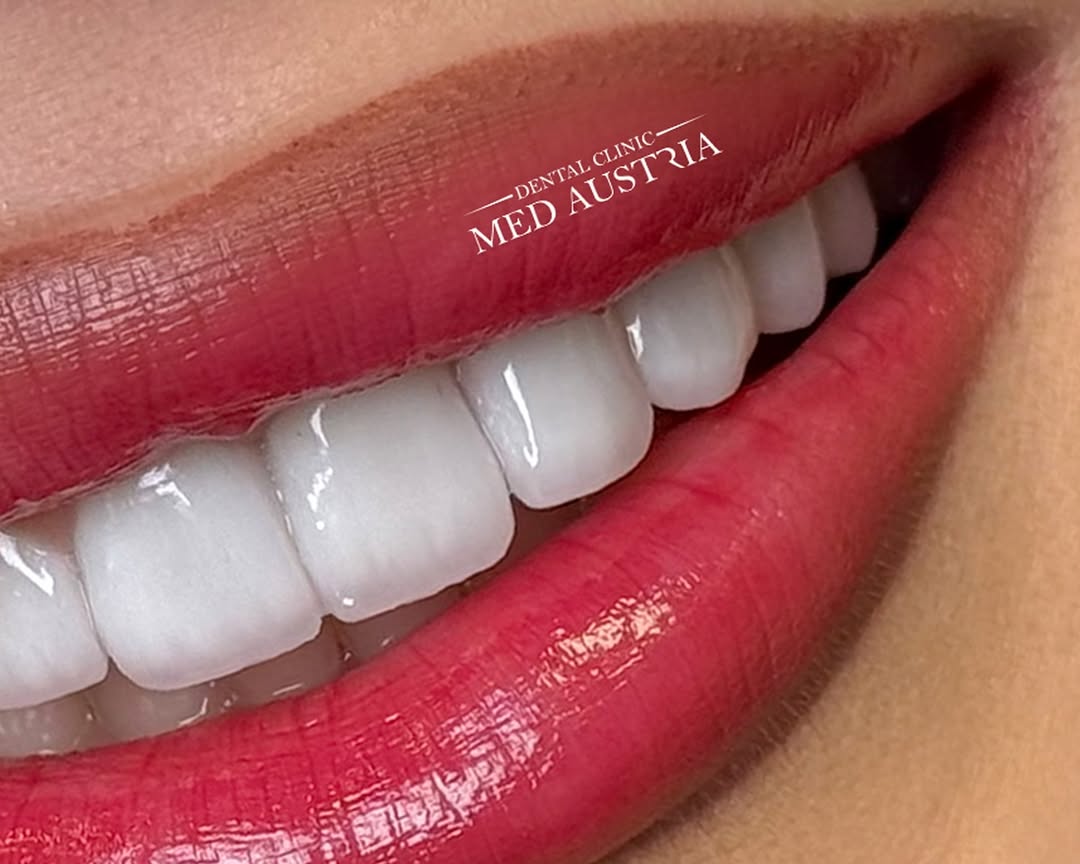
DMA runs the design process digitally from end to end. An intraoral scan (3Shape or Medit) plus CBCT imaging feeds a digital smile design, so you can preview and discuss the proposed shapes before any tooth is touched. Adjustments happen on screen and in a trial mock-up, not on your enamel.
Because restorations are milled and pressed in the clinic's own in-house CAD/CAM laboratory (iMES iCORE milling, Dekema ceramic furnaces), the ceramist and the clinician refine shade and shape together, in the same building, while you are there. Shade selection is done after whitening has stabilised, typically about two weeks later, and checked under different lighting so the result holds up in daylight, not just under the chair lamp.
When Aligners or Orthodontics Should Come First
Here is the part templates skip: if teeth are crowded, rotated or the bite is deep, straightening them first is often the honest recommendation. Aligned teeth often allow thinner veneers, sometimes with minimal or no drilling at all, and that preserves enamel you can never get back.
Yes, aligners add months before the ceramic stage begins. But a clinic that never suggests alignment before veneers, whatever the starting position, deserves a few extra questions. We cover more of those questions in our guide to choosing the best dental clinic in Albania.
e.max or Zirconia: An Honest Materials Guide
There is no universally "best" ceramic, only the best material for a position and a bite:
- IPS e.max (lithium disilicate) handles light much the way natural enamel does, which makes it the usual first choice for veneers and single front crowns.
- Premium multilayer zirconia brings higher strength for molars, patients who grind, and implant-supported work, and modern multilayer blanks look far more natural than the opaque zirconia of the past.
Many makeovers combine both: e.max in the smile zone, zirconia where force matters most. All of it is produced in-house, which shortens visits and keeps quality control in one place.
Realistic Timelines: One Visit or Two?
| Makeover scenario | Typical structure |
|---|---|
| Whitening plus laser gum contouring | Often a single short visit, with gum healing over the following days |
| Veneers and/or crowns | Usually one stay of several days, or two visits: preparation and provisionals first, final fit after |
| Aligners first, then ceramics | Months of aligner wear with scheduled progress reviews, then a finishing visit for the ceramic stage |
Exact timing is always confirmed case by case from your diagnostics. For international patients, a coordinator consolidates appointments so treatment fits a short stay, with airport pickup in Tirana and partner-hotel arrangements; many of the finished cases in our smile gallery were completed exactly this way.
Whatever the structure, expect a check of your bite before you travel home and clear aftercare instructions: how to clean around new ceramics, when to return for hygiene visits, and whether a night guard is sensible if you grind. Well-maintained e.max and zirconia restorations are designed for long service, and your written plan sets out realistic maintenance expectations for your case.
Why "Hollywood White" Is Not Natural Excellence
Ultra-opaque, bleach-shade, perfectly uniform teeth photograph loudly and read as artificial in daylight. Natural excellence is quieter: gradients of translucency at the edges, subtle surface texture, and shapes that suit your face and age rather than a filter.
The final shade is always your choice. Our clinical team's job is to show you honestly, on the digital preview and the mock-up, what each option will look like on you, and to say plainly when a shade or shape is unlikely to age well. No clinic can guarantee a cosmetic outcome; what a good clinic can guarantee is a transparent process and its own work, and DMA backs every case with a written treatment guarantee.
Free treatment plan
Find out what your new smile could look like in Tirana
Send a panoramic X-ray or a few photos and our clinical team will reply with a free, written treatment plan within 24–48 hours, with no obligation.
Get my free planHow to Start: A Free Written Plan Within 48 Hours
Cost is a fair question, and the honest answer is qualitative: treatment in Albania costs less than in Western Europe mainly because clinic overheads are lower, not because materials or standards have to be, and DMA's in-house laboratory removes outsourcing from the chain. The clinic has treated more than 24,000 patients since 2009, works to ISO 9001 quality management certified by TUV NORD, and is a member of the ITI (International Team for Implantology).
Send a panoramic X-ray (OPG), a CBCT or recent photos, and our clinical team will prepare a free, personalised, no-obligation written treatment plan within 24-48 hours, with transparent itemised pricing confirmed for your case. Care is available in English, Italian, German, French and Albanian. Request your smile makeover plan through our contact page and see exactly what your version of an honest makeover would involve, before you commit to anything.
Frequently asked questions
What is included in a smile makeover in Albania?
A smile makeover at Dental Med Austria in Tirana can combine professional whitening, e.max or zirconia veneers and crowns, laser gum contouring and, when the bite requires it, clear aligners or orthodontics first. The exact combination is decided from a 3D CBCT scan and clinical examination, because every element must suit your individual teeth, gums and bite. Hygiene and any necessary health treatment always come before the cosmetic stage.
How many visits does a smile makeover take in Albania?
Ceramic smile makeovers at Dental Med Austria are typically completed in one stay of several days or across two short visits: the first for diagnostics, preparation and provisionals, the second for the final fit. Whitening combined with laser gum contouring can often be done in a single visit, while aligner-first cases add months of wear before the ceramic stage. The clinic's in-house laboratory shortens the process, and exact timing is confirmed from your diagnostics.
Do I need braces or aligners before getting veneers?
Not always, but when teeth are crowded, rotated or the bite is deep, aligning them first is often the healthier route because it can allow thinner veneers and preserve more natural enamel. Skipping alignment can force more aggressive drilling to imitate straightness with ceramics. Suitability is assessed individually at Dental Med Austria from a CBCT scan and bite analysis.
What is the difference between e.max and zirconia for a smile makeover?
IPS e.max is a lithium disilicate ceramic that transmits light much like natural enamel, so it is usually preferred for veneers and front crowns. Premium multilayer zirconia is stronger, which makes it the safer choice for molars, heavy grinders and implant-supported restorations. Dental Med Austria mills both materials in its own in-house CAD/CAM laboratory, and many makeovers combine the two.
Will a smile makeover look fake or too white?
Only if it is designed that way. A well-planned makeover uses digital smile design, a mock-up preview and shade selection matched to your face, skin tone and age, with translucency gradients rather than a flat bleach shade. At Dental Med Austria the final shade is your choice, but the clinical team will advise honestly when an ultra-white or over-uniform look is unlikely to age well.
How do I get a smile makeover plan from Dental Med Austria?
Send a panoramic X-ray (OPG), a CBCT or recent photos through the clinic's contact page, and the clinical team prepares a free, personalised, no-obligation written treatment plan within 24-48 hours. The plan itemises each recommended treatment with transparent pricing confirmed for your case. Care is available in English, Italian, German, French and Albanian, and a coordinator consolidates appointments so treatment fits a short stay in Tirana.