
2026-07-27 · 8 min read
Key takeaways
- Modern dental prosthetics span flexible removable dentures, implant overdentures on locator attachments, and fixed full-arch bridges on rigid internal frameworks such as milled titanium bars or PEEK.
- Implant overdentures snap onto locator attachments on dental implants and, for most suitable patients, give markedly better chewing stability than conventional suction-held dentures; suitability is confirmed individually from diagnostics.
- Dental Med Austria in Tirana designs, mills and adjusts restorations in its own in-house CAD/CAM laboratory using Ivoclar IPS e.max, GiSi pressed e.max ceramic and premium multilayer zirconia.
- Dental Med Austria has treated more than 24,000 patients since 2009, works to ISO 9001 certified by TUV NORD, and is a member of the ITI (International Team for Implantology).
- Dental Med Austria prepares a free, no-obligation written treatment plan with itemised pricing within 24-48 hours from a panoramic X-ray (OPG), CBCT scan or recent photos.
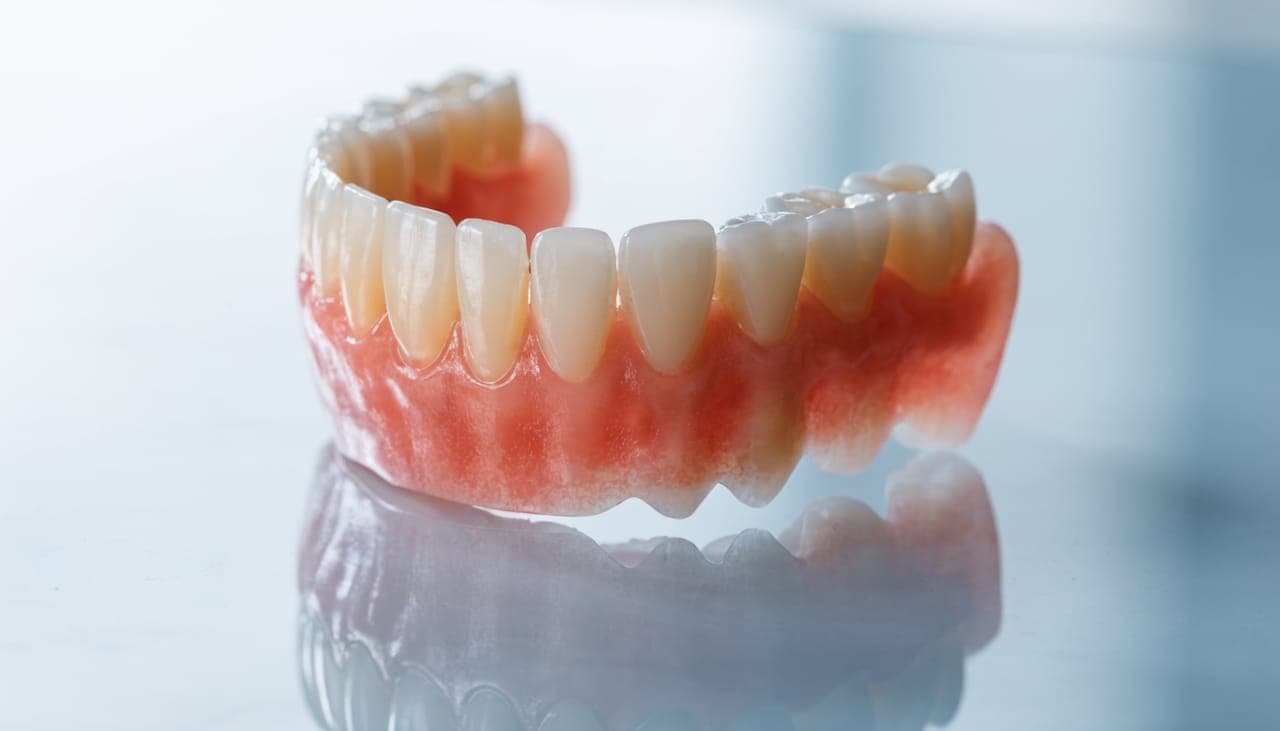
Dental prosthetics in Albania now cover far more than the loose plastic plate many people still picture. Options range from flexible removable dentures to implant overdentures that snap onto locator attachments, and fully fixed full-arch bridges built on rigid internal frameworks. At Dental Med Austria (DMA) in Tirana, the right solution is chosen from 3D CBCT diagnostics, bone volume, budget category and lifestyle, not from a brochure, and restorations are designed, milled and adjusted in the clinic's own in-house CAD/CAM laboratory.
Dental Prosthetics Have Moved Beyond the Stereotype
Say "dentures" and most people imagine an ill-fitting plate soaking in a glass overnight. That stereotype is decades out of date. Modern prosthetic dentistry is a spectrum, and the differences between the options matter enormously in daily life.
The main categories in modern prosthetic dentistry are:
- Removable partial and complete dentures, the traditional starting point
- Flexible dentures made from lightweight thermoplastic materials
- Implant overdentures that clip onto locator attachments for stability
- Bar-retained overdentures that seat onto a milled bar
- Fixed full-arch prosthetics, the All-on-4 and All-on-6 concept, which never leave the mouth
Prosthetics and dentures, including full-arch All-on-4 and All-on-6 solutions, are part of DMA's full catalogue of prosthetic and implant treatments. Which of these routes fits your case is never assumed in advance: it is confirmed individually from diagnostics, because each suits a different combination of bone, budget category and lifestyle.
Fixed vs Removable Dentures: The Difference in Daily Life
A removable prosthesis comes out at home for cleaning. It may rest on the gums, clasp onto remaining teeth, or clip onto implants. Removable options are generally simpler to repair and adjust, kinder to limited budgets, and easier to keep clean for patients with reduced dexterity.
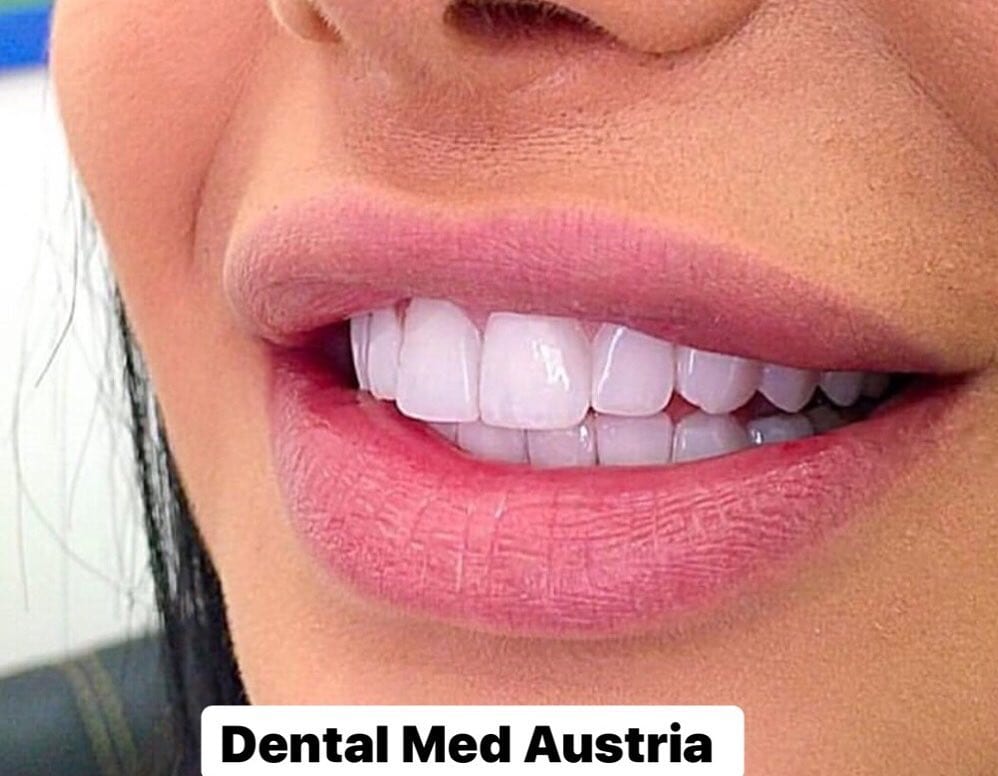
A fixed prosthesis is secured onto implants and stays in place around the clock. It is the closest experience to natural teeth: nothing moves when you eat or speak, and there is no plate to take out at night. In exchange, it requires sufficient implant support in the bone, disciplined home hygiene and regular professional maintenance.
Neither is better in the abstract. The honest question is which one fits your anatomy, your priorities and your willingness to maintain it, which is why our clinical team decides with you only after diagnostics.
Flexible Dentures: Comfortable, Discreet, Honest About Limits
Flexible dentures are made from thermoplastic materials rather than rigid acrylic. They are lighter, thinner, and free of the visible metal clasps that give traditional partial dentures away when you smile.
They are a genuinely good option for some patients, but honesty matters here:
- They work best as partial dentures where healthy teeth remain to share the load
- They are difficult to reline or add teeth to later, so they suit stable situations
- Like all gum-borne dentures, they do not stop the gradual bone shrinkage that follows tooth loss
Our clinical team will say plainly when a removable denture is a smart choice for your situation and when it would only postpone a better solution.
Implant Overdentures on Locators vs Conventional Dentures
The single biggest upgrade in removable prosthetics is the implant overdenture. Instead of relying on suction and gum support, the denture snaps onto locator attachments fixed to dental implants, often two to four in the lower jaw depending on what the CBCT scan shows.
The improvement is most noticeable in the lower jaw, where conventional complete dentures have the least suction to work with. For most suitable patients, an overdenture means markedly better stability when chewing and speaking, less pressure on the gums, and more confidence in company. It still comes out at home for cleaning, which many patients find reassuringly simple.
| Option | How it is held | Chewing stability | Removable at home | Typically suits |
|---|---|---|---|---|
| Conventional complete denture | Suction and gum support | Lowest, can shift in function | Yes | Limited budgets, patients avoiding surgery |
| Flexible partial denture | Grips remaining natural teeth | Moderate, depends on remaining teeth | Yes | Gaps with healthy neighbouring teeth |
| Locator implant overdenture | Snaps onto attachments on implants | High, resists shifting | Yes | Denture wearers who want real stability |
| Fixed full arch on implants | Secured onto implants | Highest, closest to natural teeth | No, removed only by the dentist | Patients wanting a permanent solution |
Suitability is always individual: bone volume, gum health and general health all shape the recommendation.
Full-Arch Fixed Prosthetics: What Sits Inside the Bridge
For patients who want teeth that never leave the mouth, full-arch fixed prosthetics restore an entire jaw on a small number of implants, typically four to six, the concept behind All-on-4 and All-on-6.
Inside every full-arch bridge sits a framework, and it deserves more attention than it usually gets:
- A milled titanium bar offers exceptional strength and a precise passive fit across the implants
- A PEEK framework is a modern high-performance polymer alternative: lighter, with a degree of shock absorption that some patients find more comfortable
Whatever framework a case calls for, the visible restoration at DMA is built from premium multilayer zirconia or Ivoclar IPS e.max ceramics for natural aesthetics, and the framework choice is confirmed case by case in your written plan. The implants beneath come from documented systems: Straumann BLT and BLX (Swiss-made), ETK Premium and ETK (France, CE-marked), Alpha-Bio, DETECH, and Biodem (Germany, CE-marked). Every implant carries a lifetime manufacturer warranty, a documented serial number and a patient-held implant passport, so you always know exactly what is in your jaw. Where indicated, Navident dynamic navigation guides implant placement against the 3D surgical plan.
How Prosthetics Are Made in Our In-House Lab in Tirana
Many clinics send prosthetic work to an external laboratory and wait for the courier. DMA designs, mills, presses and glazes on site.
- Digital impressions with 3Shape and Medit intraoral scanners replace most conventional tray impressions
- The iMES iCORE CAD/CAM unit mills premium multilayer zirconia and e.max restorations in the clinic
- Dekema ceramic furnaces handle crystallisation and glazing
- Ivoclar IPS e.max and GiSi pressed e.max ceramic cover high-aesthetic cases
For a prosthetic patient the practical benefit is precision and speed of adjustment: shade corrections, bite refinements and fit changes happen during your visit rather than across postal round trips. For international patients on a short stay, that difference is often decisive, and it underpins every restorative treatment we offer.
How to Choose: Bone, Budget Category and Lifestyle
There is no universal best denture, which is why brochure-first selling should make you cautious anywhere. The decision rests on three inputs:
- Bone. The Vatech 3D CBCT scan shows exactly how much bone is available and where. If volume is insufficient for implants, regeneration with Botiss biomaterials (Cerabone and Jason membrane) can rebuild it where clinically appropriate, or the plan can shift toward options that need fewer or no implants.
- Budget category. Qualitatively, conventional and flexible dentures sit in the most accessible category, implant overdentures in the middle, and fixed full-arch work at the top. Exact itemised pricing is confirmed per case in a written plan, never quoted from a generic list.
- Lifestyle. How often you dine out or speak publicly, how much you value the feel of fixed teeth, and how comfortably you can manage cleaning routines all shape the right recommendation.
If you are weighing these trade-offs, our answers to common patient questions cover many of the practical details international patients raise.
Why Patients Choose Albania, and What to Check at Any Clinic
Albania has become a serious destination for prosthetic dentistry because clinics here can run modern equipment with lower operating overheads than in much of Western Europe, and that difference flows into treatment costs. But geography alone is no reason to trust a clinic. Wherever you go, check the same things:
- A documented quality system: DMA works to ISO 9001, certified by TUV NORD, with documented sterilisation and infection-control protocols
- Professional affiliation: DMA is a member of the ITI (International Team for Implantology)
- Traceable materials: named implant brands, serial numbers and a patient-held implant passport
- Written guarantees: every DMA case carries a written treatment guarantee alongside the manufacturers' lifetime implant warranties
- A track record: DMA has treated more than 24,000 patients since 2009, from Albania and from the UK, Ireland, Italy, Germany, Switzerland, Austria and France
Care is provided in English, Italian, German, French and Albanian, with airport pickup in Tirana, partner-hotel arrangements and a coordinator who consolidates appointments so treatment fits a short stay. If you would like to talk any of this through before deciding, you can contact our team in Tirana at any stage.
Free treatment plan
Find out what your new smile could look like in Tirana
Send a panoramic X-ray or a few photos and our clinical team will reply with a free, written treatment plan within 24–48 hours, with no obligation.
Get my free planStart With Diagnostics, Not a Brochure
If you are considering dentures or fixed prosthetics, do not choose from a catalogue photo. Send us a panoramic X-ray (OPG), a CBCT scan or recent photos, and our clinical team will prepare a free, personalised, no-obligation written treatment plan within 24-48 hours, with transparent itemised pricing confirmed for your case. You will see exactly which options your bone, budget category and lifestyle realistically support, and why. Request your free written treatment plan and start from facts, not marketing.
Frequently asked questions
What types of dentures and dental prosthetics are available in Albania?
Modern prosthetic dentistry spans conventional removable partial and complete dentures, flexible thermoplastic dentures, implant overdentures that snap onto locator attachments, bar-retained overdentures, and fixed full-arch bridges, the All-on-4 and All-on-6 concept. Dental Med Austria in Tirana offers prosthetics and dentures as part of its full treatment menu, plans cases from Vatech 3D CBCT imaging, and mills restorations in its own in-house CAD/CAM laboratory. Which option fits a given patient depends on bone volume, budget category and lifestyle, assessed individually from diagnostics.
Are implant overdentures really more stable than conventional dentures?
For most suitable patients, yes. A conventional complete denture relies on suction and gum support, so it can shift when chewing or speaking, especially in the lower jaw. An implant overdenture snaps onto locator attachments fixed to dental implants, which gives markedly better stability in function while remaining removable at home for easy cleaning. Suitability is confirmed individually from a CBCT scan of your jaw.
How many implants are needed to stabilise a denture?
It varies by case, but a lower-jaw locator overdenture is often supported by two to four implants, while full-arch fixed prosthetics typically use four to six implants per jaw, the concept behind All-on-4 and All-on-6. The exact number depends on bone volume and quality. That is why Dental Med Austria plans every case from a Vatech 3D CBCT scan rather than a standard formula.
What is the difference between a titanium bar and a PEEK framework for full-arch prosthetics?
Both are internal frameworks that give a full-arch fixed bridge its strength. A milled titanium bar offers exceptional rigidity and a precise passive fit across the implants, while PEEK is a modern high-performance polymer that is lighter and has a degree of shock absorption some patients find more comfortable. At Dental Med Austria in Tirana the visible restoration is built from premium multilayer zirconia or Ivoclar IPS e.max ceramics, and the framework recommendation is made case by case from diagnostics and confirmed in your written plan.
Can dental prosthetics in Tirana be completed during a short stay?
Many prosthetic treatments are organised to fit a short visit because Dental Med Austria mills and adjusts restorations in its own in-house laboratory, and a coordinator consolidates appointments into as few days as the case allows. Implant-based options usually involve a healing phase, so they may be staged across more than one visit depending on the individual plan. Airport pickup in Tirana and partner-hotel arrangements are available, and care is provided in English, Italian, German, French and Albanian.
How do I find out what dentures or prosthetics would cost for my case?
Dental Med Austria prepares a free, personalised, no-obligation written treatment plan within 24-48 hours from a panoramic X-ray (OPG), a CBCT scan or recent photos. The plan sets out the recommended options with transparent itemised pricing confirmed for your specific case. That lets you compare fixed, removable and implant-retained routes on concrete, itemised figures for your own situation before committing to anything.