
2026-05-28 · 6 min read
Is dental tourism in Albania safe? Yes, dental tourism in Albania is safe when you choose an accredited clinic that follows recognised European standards, uses brand-name implants and materials, and gives you a written treatment plan and guarantee. The real risk comes not from the country but from the individual clinic, so the safety of your trip depends almost entirely on who you book with and how carefully you vet them.
Albania, and Tirana in particular, has become a leading destination for UK, Irish and international patients seeking high-quality treatment. At Dental Med Austria in Tirana, the model is simple: premium-quality dentistry, delivered under ISO 9001 and European quality standards by an experienced clinical team. Below we explain honestly what "safe" really means, how to separate trustworthy clinics from merely cheap ones, and how to protect yourself before, during and after you travel.
Is dental tourism in Albania safe
For most patients the answer is a confident yes, provided you do your homework. Albania's better clinics follow the same European norms, sterilisation protocols and implant systems used across Germany, Switzerland and the UK. What changes is the cost of labour and overheads, not the quality of the dentistry or the materials going into your mouth.
That said, "Albania" is not a blanket guarantee. A back-street practice using unbranded implants is a genuine risk anywhere in the world, including the UK. The sensible question is therefore not "is the country safe?" but "is this specific clinic safe?" A practice with documented accreditation, a verifiable track record and a written guarantee is a safe dental clinic in Albania; one that cannot show you those things is not, wherever it happens to be. As a benchmark, Dental Med Austria has placed more than 42,000 implants with a 98% success rate, a volume and outcome record you should expect any clinic you trust to be able to evidence.
How to vet a clinic
Vetting is where you turn dental tourism in Albania from a gamble into an informed decision. Work through this checklist before you pay a deposit:
- Accreditation and standards. Ask for proof of ISO 9001 certification and adherence to European quality standards. These are auditable, not marketing slogans.
- Named, qualified clinicians. You should know exactly who is treating you. At Dental Med Austria you are treated by named, qualified clinicians, not an anonymous rota.
- Brand-name implants you can look up. Insist on named systems such as Straumann BLX (the Swiss-made gold standard), ETK (French), Alpha-Bio or Biodem (German, CE-marked, supplied with an implant passport). If a clinic will not name the brand, walk away.
- A written, itemised treatment plan. It should list every procedure, material and cost. A reputable clinic provides this in writing before you fly. You can review the full range of treatments on the treatments catalogue.
- A real guarantee. Dental Med Austria offers a written treatment guarantee, and the implants themselves carry a lifetime manufacturer warranty. Get the terms in writing.
- Honest, multilingual communication. Clear answers in your own language (here, English, Italian, German and Albanian are supported) are a strong sign of a professional operation.
On price, transparency matters as much as the number. Single dental implants and zirconia crowns are placed to premium standards on brand-name systems. Treat any figure you read online as a rough guide only. The reliable way to know your personalised plan is a free assessment based on your own X-rays. Browse our treatment packages to see how full smile makeovers and full-arch cases are structured.
Standards, sterilization and materials
Safety in the surgery comes down to three things: cleanliness, the materials used, and the technology guiding the work.
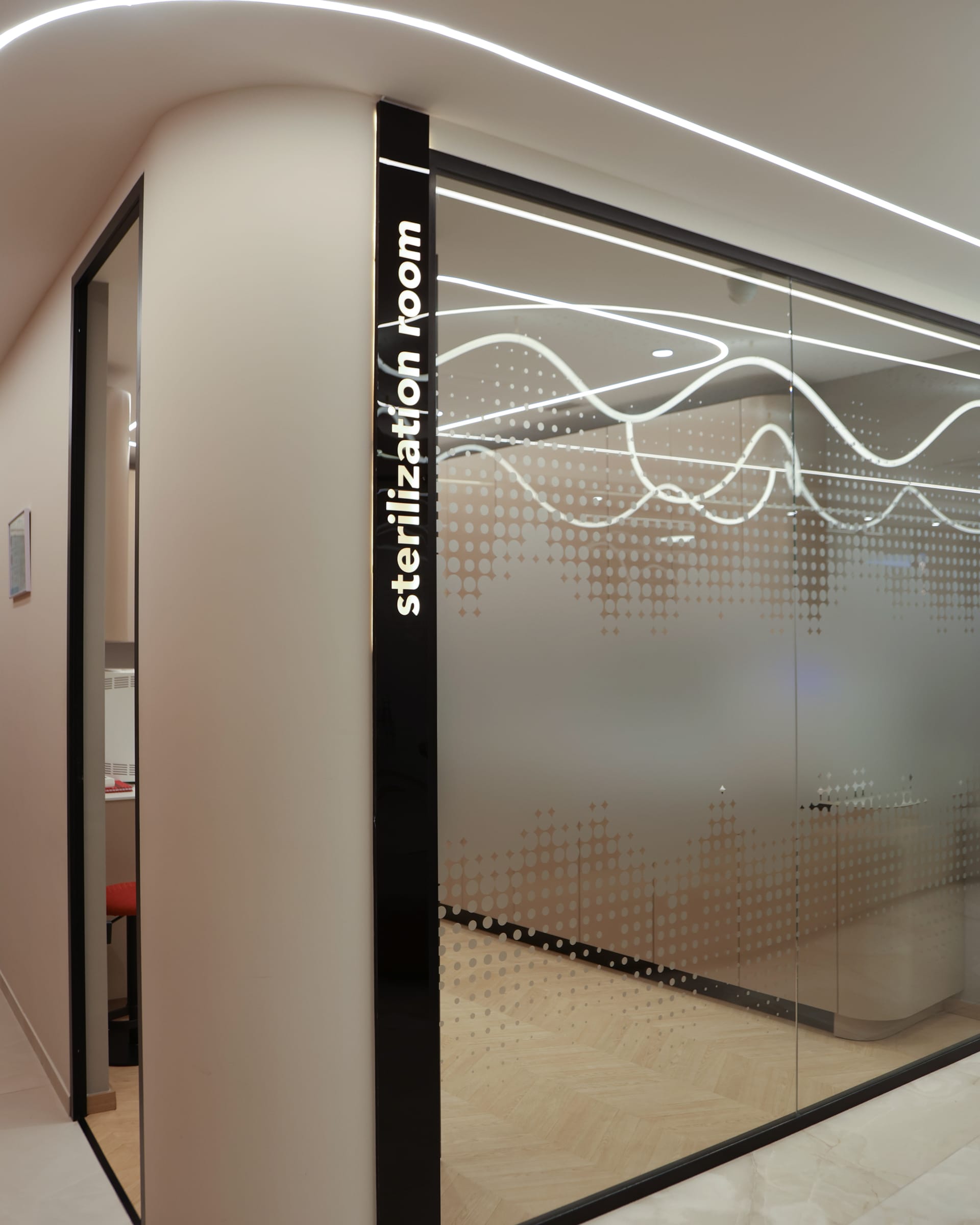
On sterilisation, the standard to look for is a documented, rigorous sterilisation protocol, the same level used in modern European hospitals. It reliably sterilises wrapped, hollow and porous instruments, which matters for surgical procedures like implants. Dental Med Austria operates to this standard as a matter of routine.
On materials, the brand names tell the story. For crowns, bridges and veneers, look for Ivoclar IPS e.max and zirconia for natural-looking aesthetics. For bone grafting and regeneration, Botiss biomaterials such as Cerabone and the Jason membrane are well-documented European products. These are the same materials a high-end clinic in London or Zurich would use, and they are fully traceable.
On technology, modern equipment reduces risk and improves precision. Dental Med Austria uses Vatech 3D CBCT imaging for accurate diagnosis, in-house iMES iCORE CAD/CAM milling so restorations are made on site, Navident guided implant surgery for precise placement, and a Zeiss operating microscope for fine work such as root canals. Guided surgery in particular makes implant placement more predictable and safer.
Aftercare back home and complications
The most common worry about treating abroad is what happens once you fly home. It is a fair concern, and a good clinic plans for it rather than hoping it never comes up.
First, complications are uncommon but not impossible with any dental work anywhere. No ethical clinic can promise a perfect outcome, and you should be wary of any that does. What a trustworthy clinic can promise is a clear plan if something does go wrong. That is the practical value of the written treatment guarantee and the lifetime implant warranty: they put the clinic on the hook to put things right.
Second, your treatment plan should be paced sensibly. Implants usually need a healing period before the final restoration, which often means two trips a few months apart rather than one rushed visit, a safer sequence that protects long-term results.
Third, keep every record. A clinic that supplies your CBCT scans, implant passport and a written summary makes it far easier for a UK dentist to handle routine follow-up such as a check-up or hygiene visit. Read our aftercare guidance for what to expect during healing and how to look after your new teeth at home. From Tirana, multilingual support means you can also reach the clinic directly if you have a question once you are back in the UK or Ireland.
Free treatment plan
Find out what your new smile could look like in Tirana
Send a panoramic X-ray or a few photos and our clinical team will reply with a free, written treatment plan within 24–48 hours, with no obligation.
Get my free planConclusion and CTA
So, is dental tourism in Albania safe? Yes, when you choose carefully. Pick a clinic with ISO 9001 and European standards, rigorous sterilisation protocols, named clinicians, brand-name implants like Straumann BLX, and a written treatment guarantee, and you can expect treatment that matches Western European quality.
The simplest way to find out whether Albania is right for you is to get a plan with no obligation. Send us your X-rays or a few photos and our team in Tirana will prepare a free personalised treatment plan within 24 to 48 hours, with clear, transparent options. We also arrange airport pickup in Tirana, partner hotels and multilingual support in English, Italian, German and Albanian. Contact us today to request your free remote treatment plan and see exactly what safe, high-quality care in Albania would look like for you.
Frequently asked questions
Is dental tourism in Albania safe?
Yes, it is safe when you choose an accredited clinic. Look for ISO 9001 and European standards, rigorous sterilisation protocols, named clinicians, brand-name implants and a written guarantee. The risk depends on the clinic, not the country, so vet your provider carefully before you book.
How do I choose a safe dental clinic in Albania?
Have a look at whether the clinic's website shows ISO 9001 certification, named qualified dentists, brand-name implants such as Straumann BLX or Biodem, and a clear guarantee, and whether you receive a written treatment plan. Dental Med Austria in Tirana covers all of these and provides records you can share with your dentist at home.
How much do dental implants cost in Albania?
Single implants and zirconia crowns are placed to premium standards on brand-name systems. The reliable way to plan your treatment is a free personalised plan based on your own X-rays.
What happens if there is a complication after I return home?
Complications are uncommon but possible with any dental work. A trustworthy clinic plans for this with a written guarantee. Dental Med Austria offers a written treatment guarantee and a lifetime implant warranty, and provides your records so a UK dentist can manage routine follow-up.
What standards and materials does a quality Albanian clinic use?
Look for rigorous sterilisation protocols, CE-marked implants, and materials such as Ivoclar IPS e.max, zirconia and Botiss biomaterials. Dental Med Austria also uses Vatech 3D CBCT, in-house CAD/CAM milling, Navident guided surgery and a Zeiss microscope, matching high-end European clinics.
Is it worth travelling from the UK to Albania for dental work?
For many patients yes, because implants, crowns and full-mouth work are delivered to premium standards at the right clinic. Dental Med Austria offers a free remote plan within 24 to 48 hours, airport pickup in Tirana, partner hotels and multilingual support.