
2026-06-27 · 12 min read
Albania has quietly become one of Europe's fastest-growing destinations for dental implants. Patients travel to Tirana from the UK, Ireland, Italy, Germany and Switzerland not only because treatment is more affordable, but because they can receive the same internationally recognised implant systems, restorative materials and digital planning found at a leading clinic in Western Europe.
This guide explains how implant treatment in Albania actually works: who it suits, how the price is decided, which systems are used, what the journey and healing involve, and how the risks are managed. At Dental Med Austria in Tirana, every case is planned individually from a 3D scan, and instead of a generic online quote we prepare a personalised treatment plan from your X-rays or photographs, free of charge and with no obligation.
Why patients choose Albania for dental implants
The most common misconception about dental tourism is that a lower price must mean lower quality. In reality, the difference comes almost entirely from operating costs. Wages, rent and overheads are lower in Tirana than in London, Dublin or Zurich, so the practice around the treatment costs less to run - the implants, the materials and the clinical standards are not what changes.
The implant placed in your jaw is a globally traded medical device. A Straumann implant costs a clinic in Albania much the same as it costs a clinic in Germany, and it is placed using the same digital planning and guided-surgery techniques. That single distinction is why patients can access premium-quality implant dentistry in Tirana for far less than at home, without compromising on the parts that decide long-term success. Choosing the right clinic still matters far more than choosing the right country, which is what the rest of this guide is about.
Are you a good candidate for dental implants?
Most adults who have lost one or more teeth are suitable for implants. A few factors decide whether you are a straightforward case or need some preparation first:
- Bone volume. An implant needs enough healthy jawbone to anchor into. Years without a tooth can shrink the bone, but this is common and manageable.
- Healthy gums. Active gum disease is treated before implants are placed, because stable gums protect the implant for the long term.
- General health. Well-controlled diabetes, your medication and your lifestyle are all taken into account. Heavy smoking slows healing and raises the risk of failure, so it is worth cutting down before and after surgery.
- A fully grown jaw. Implants are for adults whose jaw has finished developing.
Where bone is limited, it can be rebuilt with grafting materials or a sinus lift so an implant is still placed safely, which means being told elsewhere that you have "too little bone" rarely puts implants out of reach. The only reliable way to know your situation is a 3D CBCT scan, and that is exactly what your free remote plan is based on. You can see the full range of procedures in the treatment catalogue.
How much do dental implants cost in Albania?
There is no single honest price for a dental implant, and any clinic that quotes one before seeing your jaw is guessing. The final figure depends on factors such as:
- how many implants you need
- which implant system is chosen
- whether bone grafting or a sinus lift is required
- the type of crown, bridge or full-arch restoration on top
- any temporary restorations worn during healing
Rather than a headline number, our clinicians assess your panoramic X-ray or CBCT scan and prepare a detailed written plan within 24-48 hours, setting out the recommended treatment, the timeline and transparent, itemised pricing. You can also see how complete cases are bundled in our implant and smile packages.
Why some clinics are so much cheaper than others
If one quote is dramatically lower than the rest, it is worth asking what has been left out. Genuine savings come from lower overheads. Artificial savings come from cutting corners: unbranded implants that cannot be serviced later, no 3D imaging, an outsourced laboratory, skipping the healing period to force everything into a single trip, or offering no written guarantee. A fair price reflects proven components and accountability, not the lowest possible sticker.
The implant systems and materials we use
Long-term success begins with the implant itself, and the brand on the screw is one of the most important decisions in the whole treatment: it determines reliability and your ability to obtain matching parts decades later, anywhere in the world. Depending on your clinical needs, we use internationally recognised systems:
- Straumann BLX and BLT (Switzerland) - the Swiss-made gold standard for demanding cases.
- ETK (France) - a well-established, CE-marked European system.
- Alpha-Bio - a dependable, widely used option.
- Biodem (Germany) - a German, CE-marked system supplied with its own implant passport.
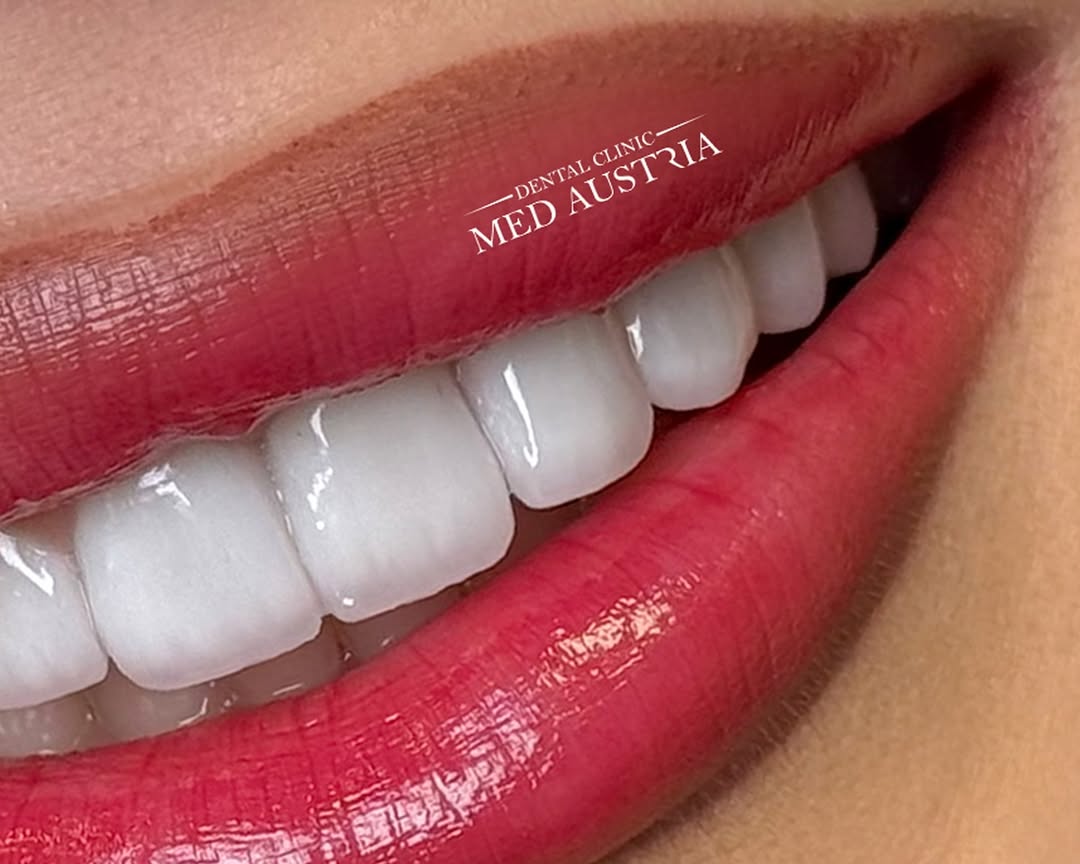
Every implant carries a lifetime manufacturer warranty and documented serial numbers, so your records travel with you. The crowns and bridges placed on top are made from authentic Ivoclar IPS e.max and zirconia for strength and natural-looking layering, while any bone or tissue regeneration uses trusted Botiss biomaterials such as Cerabone and the Jason membrane.
Why implant brands matter
An unbranded or discontinued implant can become impossible to repair if a component loosens or a crown ever needs replacing, because no dentist can order the matching part. A globally supported system such as Straumann can be serviced by any competent implant dentist, in any country, years from now. Paying attention to the brand is how you protect the treatment long after you have flown home.
Single implants vs All-on-4 and All-on-6
The right solution depends on how many teeth are missing and the condition of your jaw. The main options compare like this:
| Option | Best for | Implants used | Typical trips |
|---|---|---|---|
| Single implant | One missing tooth | One per tooth | Two |
| Implant bridge | Several missing teeth in a row | Two or more | Two |
| All-on-4 | A full arch with limited bone | Four per arch | Two |
| All-on-6 | A full arch, good bone, maximum stability | Six per arch | Two |
Replacing single teeth one at a time gives the most natural result where only a few are missing. For a whole arch, All-on-4 and All-on-6 fix a complete set of teeth onto four or six implants, often with a temporary fixed bridge the same day - far more stable and comfortable than a removable denture. Which is right for you is decided from your CBCT scan, not from a brochure.
Your treatment journey, step by step
Treatment begins long before you arrive in Tirana.
- 1Before you travel. Send us a panoramic X-ray (OPG) or a few recent photographs. Within 24-48 hours you receive a personalised plan with the recommended treatment, an estimated timeline, indicative costs and travel guidance.
- 2Your first visit. After a consultation and a Vatech 3D CBCT scan, implants are placed using Navident guided surgery for precise, minimally invasive positioning. Where suitable, a temporary restoration means you never leave without teeth.
- 3Healing at home. You fly home while the implants integrate with the bone, staying in touch with the clinic throughout.
- 4Your second visit. Once healed, your final crowns, bridge or full arch - milled in-house on iMES iCORE CAD/CAM equipment - are fitted and fine-tuned.
Because our laboratory is on site rather than outsourced, many restorative stages are completed faster and more precisely than at clinics that send the work away. Throughout, you have multilingual support in English, Italian, German and Albanian, plus airport pickup in Tirana and help arranging a partner hotel.
Healing timeline: what to expect
Implants succeed through osseointegration, the process by which the jawbone grows onto the implant surface and locks it in place. This is what lets an implant behave like a natural tooth root, and it cannot be rushed.
For most people, integration takes around three to six months, depending on bone quality, the site in the mouth and individual healing. That is why implant treatment is usually staged across two trips: one to place the implants and one, after healing, to fit the permanent teeth, with a temporary restoration keeping you comfortable in between. Grafted sites may need a little longer before the final restoration. Healthy habits - not smoking, good hygiene and following your aftercare instructions - measurably improve how well and how quickly you heal. Our aftercare guidance explains what to expect at each stage.
Risks, complications and how we manage them
Dental implants are one of the most predictable procedures in modern dentistry, but no honest clinic promises perfection: biology varies, and good care means planning for the uncommon case. The main risks are worth understanding:
- Infection or peri-implantitis - inflammation of the tissue around an implant, made far less likely by strict sterilisation and good aftercare.
- Failure to integrate - occasionally an implant does not fuse with the bone and is replaced; this is uncommon and covered by the guarantee.
- Nerve or sinus proximity - relevant in the lower and upper jaw respectively, which is exactly why 3D CBCT planning and guided surgery are used to map and avoid these structures before any incision.
We reduce these risks systematically: detailed CBCT diagnosis, Navident guided placement, documented sterilisation protocols, proven branded components and a sensibly staged healing period rather than a rushed single visit. If anything does need attention, the written treatment guarantee and lifetime implant warranty mean the clinic is committed to putting it right.
Safety, guarantees and long-term care
Consistent results depend on systems, not luck. Dental Med Austria works to ISO 9001 quality management and European standards, with documented sterilisation and infection-control protocols, and has placed more than 42,000 implants at a 98% success rate. Diagnosis and planning run on Vatech 3D CBCT imaging, restorations are milled in-house, and fine work such as root canals is carried out under a Zeiss operating microscope.
Your treatment is protected in writing. Every case is covered by a written treatment guarantee; the implants carry a lifetime manufacturer warranty; and an Implant Passport records exactly what was placed, so any dentist can support your care in future. Our team stays reachable after you return home, because correct healing, bite checks and the occasional adjustment are part of the clinical result, not an afterthought.
Common myths about dental tourism
A few persistent myths put people off treatment that would genuinely help them:
- "Cheap means low quality." Price reflects local overheads, not the implant or the standards - the components are identical to those used across Western Europe.
- "You can't get aftercare once you're home." A branded implant system and full documentation let any local dentist handle routine follow-up, and the clinic stays contactable.
- "It's all rushed into one trip." Responsible implant care respects the healing period; two paced trips are safer than one compressed visit.
- "Foreign implants can't be serviced at home." With globally supported systems and an implant passport, matching parts can be sourced anywhere for years.
- "Dental tourism is inherently risky." The risk sits with the individual clinic, not the country, which is why vetting matters more than geography.
Insurance and reimbursement
Many clinics avoid this subject; the reality is simple. Because Albania is not a member of the European Union, dental treatment here is not automatically reimbursed under the NHS, the HSE or most public health systems.
Some private or supplementary policies do contribute towards planned treatment abroad. Before you travel, contact your insurer and ask for written confirmation of your overseas dental cover.
If reimbursement matters to you, we can provide detailed, itemised treatment documentation - including your implant passport and clinical records - to support a claim to a private insurer.
Travel tips for visiting Tirana
Tirana is easy to reach and easy to enjoy. Direct flights connect it with the UK and Ireland in around three hours, and with much of continental Europe in one to two. A few practical pointers:
- Build in a buffer. Allow a spare day either side of surgery rather than flying out the same evening.
- Bring your records. Recent X-rays, a list of your medications and your passport are all useful to have with you.
- Let us handle the logistics. Airport pickup and a nearby partner hotel are arranged for you, with support in your own language.
- Take it easy afterwards. Light sightseeing is fine, but avoid strenuous activity, alcohol and long sun exposure in the first days after implant surgery.
Many patients combine treatment with a short, relaxed stay. Tirana is walkable, affordable and welcoming, and English is spoken throughout the clinic.
Free treatment plan
Find out what your new smile could look like in Tirana
Send a panoramic X-ray or a few photos and our clinical team will reply with a free, written treatment plan within 24–48 hours, with no obligation.
Get my free planIs Albania the right choice for you?
If your only goal is the lowest possible price, you will find plenty of options, here and elsewhere. If instead you want premium-quality implant dentistry, internationally recognised systems, documented standards and care designed around patients who travel, then the clinic you choose matters far more than the country.
On each of those measures, Dental Med Austria in Tirana is built to meet the expectations of patients travelling from across the UK, Ireland and Europe: proven implant systems, in-house digital technology, experienced clinicians and guarantees you can hold in writing.
The next step is free. Send us your panoramic X-ray or a few recent photographs and our clinical team will prepare a personalised treatment plan within 24-48 hours - with clinical recommendations, an estimated timeline, transparent pricing and honest answers to your questions, before you book a single flight. Contact our patient team to get yours.
Frequently asked questions
How much do dental implants cost in Albania?
Every mouth is different, so we never publish a single binding figure. Send a panoramic X-ray or recent photos and our team prepares a free personalised plan within 24-48 hours, with transparent, itemised pricing.
Are dental implants in Tirana good quality?
Yes. The clinic works to ISO 9001 and European standards, has placed over 42,000 implants at a 98% success rate, and uses Swiss-made Straumann alongside other CE-marked systems, all under a written guarantee.
Which implant brands does Dental Med Austria use?
Straumann BLX and BLT (Swiss-made), ETK (France), Alpha-Bio and Biodem (Germany, CE-marked with an implant passport). Every implant carries a lifetime manufacturer warranty; crowns use Ivoclar IPS e.max and zirconia.
How many trips to Albania do dental implants need?
Most cases involve two short trips: one to place the implants, and a second after healing to fit the final teeth. Your free treatment plan sets out the exact timeline for your case.
Does insurance cover dental implants in Albania?
Albania is outside the EU, so treatment is not automatically reimbursed by the NHS, HSE or standard policies. Some private plans contribute - always confirm terms in writing. We provide itemised documentation to support a claim.
Is the remote treatment plan really free?
Yes. Send a panoramic X-ray or recent photos and our team prepares a free, no-obligation plan within 24-48 hours, with airport pickup and multilingual support if you proceed.